
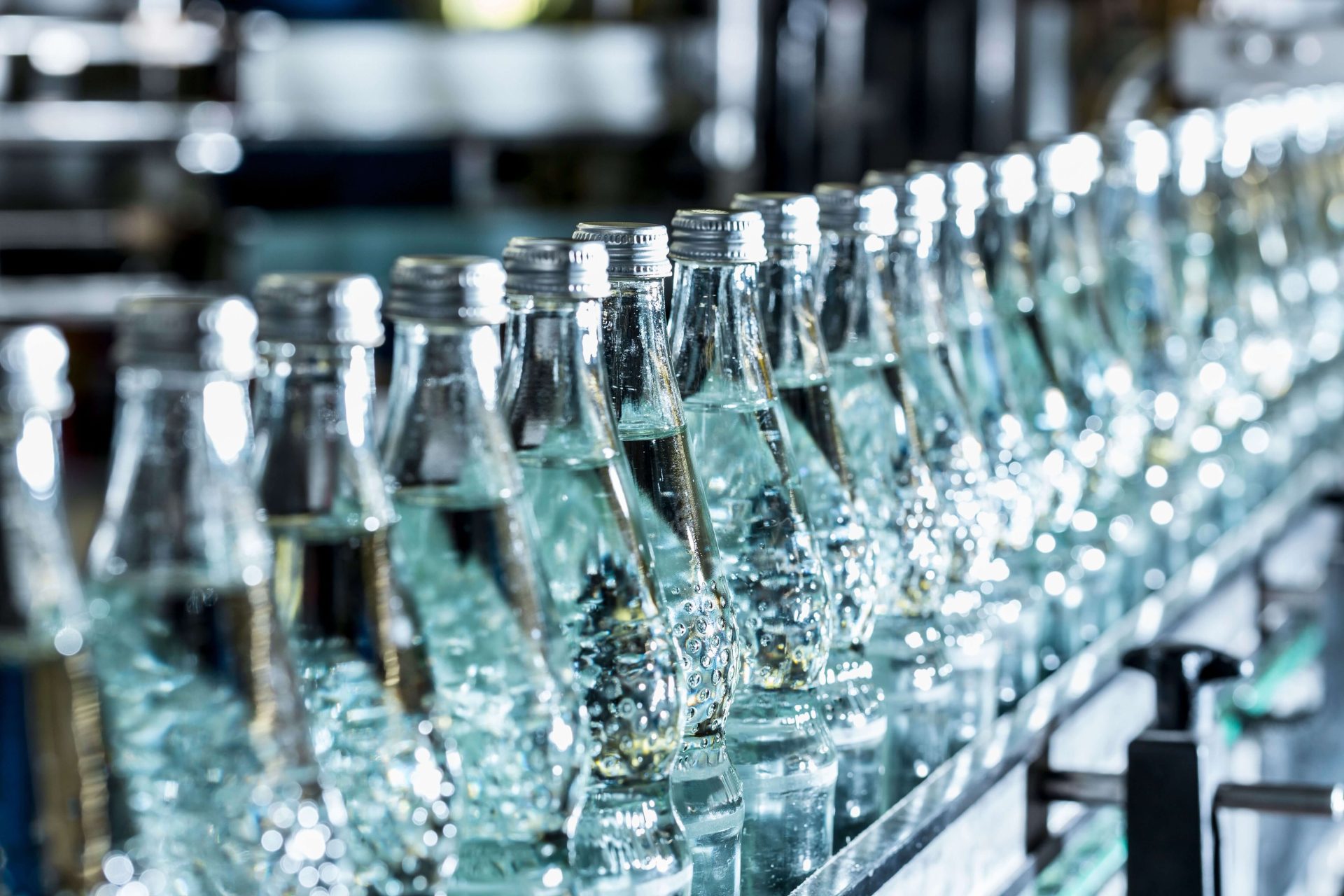
In bottled water production, filtration failures are rarely visible until they surface as a QA audit finding, a batch rejection, or a regulatory citation. Pre-treatment shortfalls foul downstream membranes before a replacement cycle is due. Unfiltered tank vents and CO2 lines expose product water to airborne contamination. Final-stage membrane cartridges without validated ASTM F838 performance carry no validated bacterial retention guarantee at the fill point.
This guide covers the best commercial water filtration system configuration for bottled water production, stage by stage, from source water intake to the fill point, with the compliance requirements and supplier verification steps that QA teams and procurement specialists need before committing to a filtration solution.
Best Commercial Water Filtration Systems: Stage-by-Stage Comparison
Bottled water filtration proceeds through a sequence of stages, each of which depends on the one before it functioning correctly. Skipping or underspecifying any stage increases the failure risk and operating cost of every stage that follows. The table below maps each filtration stage to its function, specification, and the compliance standard it must meet.
| Filtration Stage | Stage Protected | Key Specification | Compliance | Risk if Skipped |
| Pre-filtration | RO membranes, UF ceramics, water softener resins | 1 to 120 µm; depth or pleated; | FDA 21 CFR 177; EC 1935/2004 | Premature membrane fouling; increased replacement costs |
| CO2 and tank vent | Carbonation lines, product storage tanks | Down to 0.2 µm absolute; hydrophobic PTFE; gas-service validated | FDA 21 CFR 177; EC 1935/2004; FSMA Preventive Controls | Airborne microbial contamination of product water |
| Final clarification | Sterilizing membrane | Absolute-rated; multi-layer; steam sanitizable to 121°C | FDA 21 CFR 177; EC 1935/2004 | Compressed sterilizing membrane service life |
| Final product filtration | Bottle filling line | 0.2 µm absolute; ASTM F838 validated; integrity-testable | FDA 21 CFR 177; EC 1935/2004; ASTM F838 | Failed bacterial retention at the fill point |
Compliance Considerations Before You Specify a System
The regulatory framework governing your water source, treatment process, and label designation determines what your filtration process must achieve.
FDA regulates bottled water as a food product under 21 CFR Part 165, which sets product quality standards. 21 CFR Part 129 governs good manufacturing practice for source approval, plant design, and production controls. Under 21 CFR 129.35, source and operational water must meet the standards in 165.110 regardless of incoming municipal water quality. 21 CFR Part 117 requires a written food safety plan covering food-contact water quality at the point of use. A working filtration system alone does not satisfy this requirement.
Label designations under FDA 21 CFR 165 are legally linked to the treatment method. Purified water is produced using RO, distillation, deionization, or another suitable treatment process, alone or in combination. Spring, mineral, and artesian designations are defined by source characteristics that RO processing would alter. Filtration for these products must control particulate and microbial load without removing the dissolved minerals that define the label.
Commercial Water Filtration Systems

Pre-Filtration: Protecting Downstream Treatment Equipment
Suspended solids, sediment, and particulates in raw source water accumulate on RO membranes and UF ceramics, increasing differential pressure and shortening replacement cycles. Effective pre-filtration requires depth or pleated cartridge media rated from 1 to 120 µm, with FDA 21 CFR 177-compliant materials for food-contact water service. Monitor differential pressure across the filter housing; a rise above baseline signals that the cartridge is approaching capacity.
CO2 and Tank Vent Filtration: Sealing the Gas Interface
Product tanks vent to the atmosphere during filling cycles, and CO2 lines introduce gas directly into the product stream during carbonation. Both are contamination pathways that most pre-treatment specifications do not address. Both are typically protected using a hydrophobic 0.2 µm membrane validated for gas service under variable humidity and pressure conditions. A hydrophilic vent filter wets out during operation, restricting gas flow and making hydrophobic PTFE construction the preferred material specification for this application. This stage is one of the most frequently overlooked in the design of commercial bottled water filtration systems and is the most direct route for airborne microbial contamination to reach product water.
Final Clarification: Protecting the Sterilizing Membrane
Carbon fines from activated carbon beds, fine suspended solids, and low-level particulates that survive earlier stages accumulate on the sterilizing membrane surface and compress its service life. A clarification stage with absolute micron ratings and multi-layer progressive porosity captures this upstream loading before it reaches the sterilizing stage. Change-out is triggered by a differential pressure rise, not by a fixed schedule, which optimizes consumable costs while protecting the more expensive downstream sterilizing membrane.
Final Product Filtration: Sterilizing-Grade Commercial Water Filtration Before Filling
The final stage before the fill point is where bacterial retention must be validated, documented, and verified through integrity testing. ASTM F838 defines the validation standard: a 0.2 µm absolute-rated membrane challenged with Brevundimonas diminuta at 10⁷ organisms per cm² must demonstrate complete retention of the organism under the specified test conditions. Filters that do not carry a validated bacterial retention and cannot be integrity tested are not acceptable at this stage. Two common configurations are used: a standard PES membrane for high-volume continuous lines, and a premium asymmetric PES membrane for preservative-free or high-purity lines where flavor protection and maximum microorganism retention are the priority. Integrity test by diffusion flow or bubble point method following each production run; retain the results as part of your 21 CFR Part 117 Preventive Controls records.
Which Filtration Configuration Is Right for Your Facility?
These three variables determine which configuration your facility requires:
- Source water type: Municipal sources using RO typically require activated carbon pre-treatment to remove residual chlorine and organics that degrade membranes. Well, spring, and surface water sources carry higher particulate and biological loads; more robust depth pre-filtration is required to protect downstream membranes.
- Label designation: Purified water producers can deploy RO as the primary treatment stage. Spring, mineral, and artesian producers must preserve source water characteristics; filtration must control particulate and microbial load without altering mineral content.
- Production volume: High-volume continuous lines require multi-stage pre-filtration to sustain membrane service life. Batch operations may require fewer stages depending on source water quality and label constraints.
What to Verify When Evaluating Filtration Suppliers
Procurement teams and QA leads should confirm the following before finalizing any filtration supplier for a bottled water application:
- Absolute vs. nominal micron rating: For sterilizing-grade applications, only absolute-rated filters with validated bacterial retention are suitable. Nominal ratings are not sufficient.
- Bacterial challenge test documentation: For 0.2 µm sterilizing filtration, request ASTM F838 bacterial challenge validation data using B. diminuta at a minimum challenge level of 107 UFC per cm2 effective filtration area.
- FDA and EC material compliance documentation: Confirm food-contact components comply with 21 CFR 177 and EU Regulation 1935/2004.
- Replacement part availability and lead times: Confirm in-region inventory and lead times for cartridges to avoid downtime during planned maintenance windows.
Commercial Water Filtration Systems from Cleanova
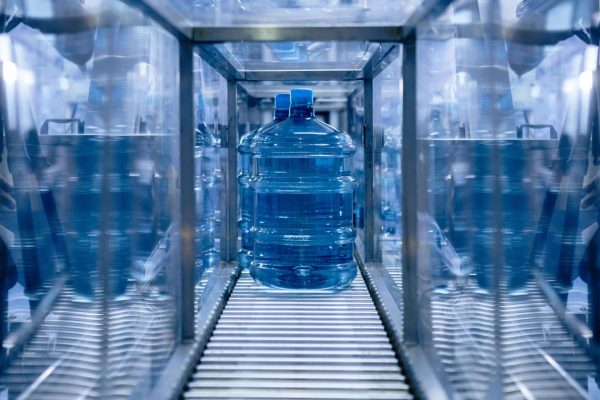
Cleanova supplies filtration solutions for every stage of the bottled water production process, with each product line mapped to the requirements covered in this guide.
- Pre-filtration: The Proxis A Series/T Series and TPPP/EPPP pleated cartridge range protects RO membranes, UF ceramics, and water softener resins from particulate fouling with FDA 21 CFR 177 and EU Regulation 1935/2004-compliant materials.
- CO2 and tank vent filtration: The PTFE Series covers CO2 and tank vent filtration with hydrophobic 0.2 µm membrane construction validated for gas service.
- Final clarification: CleanFine provides final clarification with absolute-rated multi-layer polypropylene media.
- Final product filtration: At the fill point, CleanSelect and CleanPurity deliver ASTM F838-certified 0.2 µm sterilizing-grade filtration with full FDA 21 CFR 177 and EC 1935/2004 compliance. CleanPurity’s asymmetric PES membrane, with 0.8 m² of active filtration area per 10″ element, is the specification for preservative-free and high-purity bottled water lines.
Cleanova combines filtration products, application engineering, and global manufacturing to help bottled water producers protect product quality, reduce operating costs, and simplify compliance across every stage of the filtration process.
Looking for the best commercial water filtration system?
Speak with a Cleanova filtration expert today
about your bottled water application.