
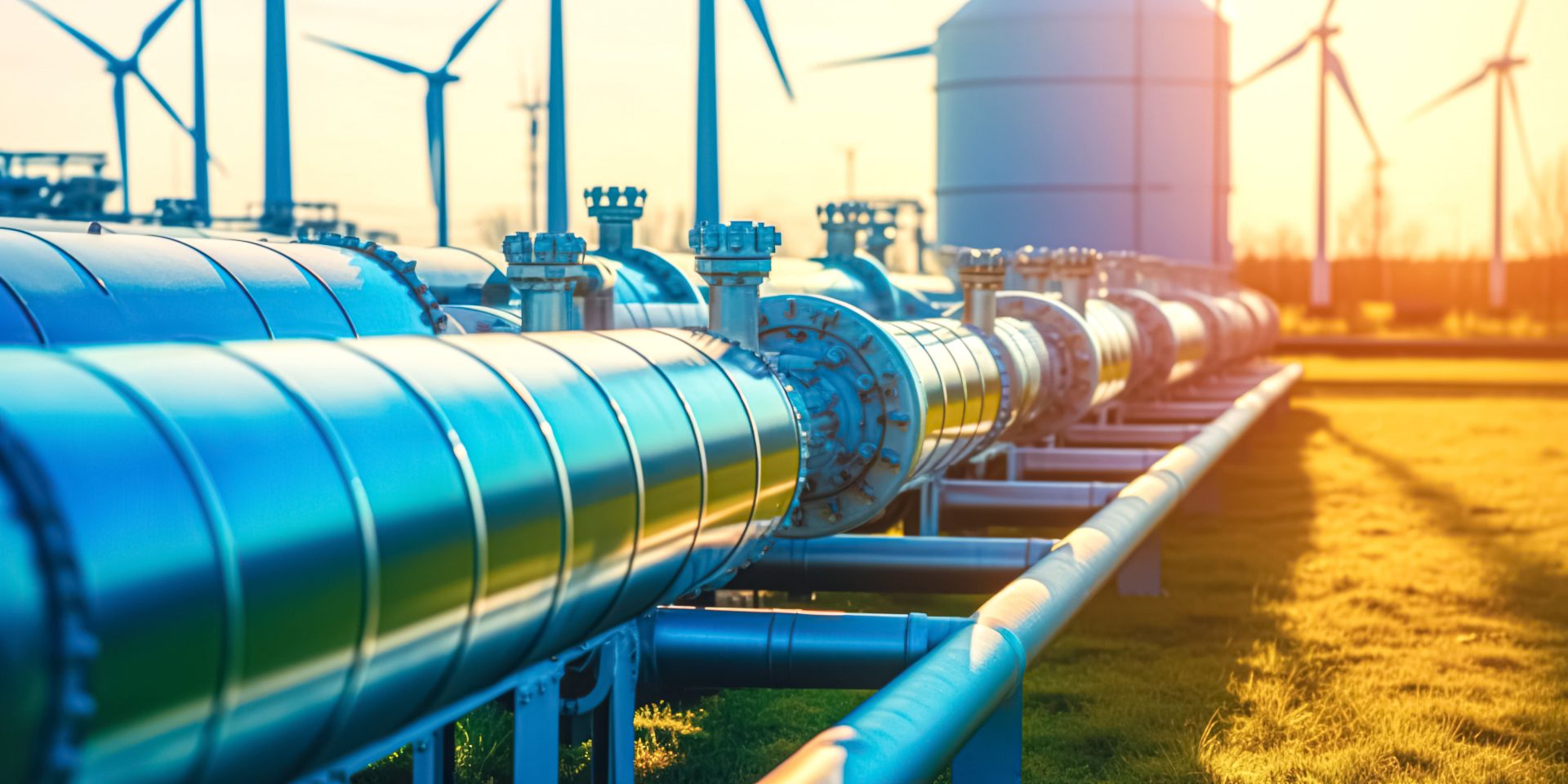
The global Carbon Capture, Utilization, and Storage (CCUS) market is projected to reach $23 billion by 2030. Hydrogen electrolyzer capacity is expected to reach 150 GW globally by the same year. Renewable fuel production is scaling to meet aviation and transport decarbonization targets across Europe, North America, and Asia.
These projections show how the energy transition is driving unprecedented investment in hydrogen, carbon capture, and renewable fuel technologies. These technologies are also connected in several ways. Green hydrogen is a key feedstock in the production of renewable fuels such as renewable diesel (HVO) and sustainable aviation fuel (SAF), while captured CO2 can be combined with low-carbon hydrogen to produce synthetic fuels (e-fuels). While often discussed in terms of emissions reduction and sustainability goals, the long-term success of these technologies depends on operational reliability. These infrastructures rely on equipment such as compressors, pumps, separators, pipelines, and process vessels to handle demanding process conditions. And this is exactly where contamination control is important.
Filtration manages the problem by removing particulates, liquid aerosols, moisture, and other contaminants from process streams to protect critical equipment, maintain process efficiency, and support long-term operation.
Contamination: A Challenge Across Energy Transition Technologies
Although hydrogen, carbon capture, and renewable fuels involve different processes and technologies, contamination is a common operational issue that reduces performance and affects equipment reliability.
In CCUS applications, impurities in captured CO2 streams can contribute to corrosion, increase energy requirements, and affect transportation and storage infrastructure. Micro-impurities, including particulate matter, are recognized as a key consideration for maintaining safe and reliable CCUS operations.
Hydrogen systems face similar challenges. Particulate contamination has been identified as a contributor to component failures and downtime in hydrogen refueling and compression infrastructure. Hydrogen fuel quality standards also impose strict limits on particulate contamination, given its impact on downstream equipment and fuel cell performance.
In renewable fuel production, contaminants such as solids, water, and organic residues can affect both process equipment and final fuel quality.
| Application | Typical Contaminants | Operational Impact | Business Impact |
| CCUs | Particulates, moisture, process impurities | Corrosion, equipment fouling, reduced capture efficiency | Increased solvent replacement costs, reduced capture performance |
| Hydrogen | Particulates, compressor oil carryover, moisture | Equipment wear, downtime, reduced reliability | Higher H2 production cost, unplanned downtime |
| Renewable fuels | Solids, phosphorus, trace metals, organic residues | Catalyst poisoning, product quality issues, process instability | Unplanned production shutdown, costly catalyst replacement |
These costly consequences are why all three technological sectors seek to maintain clean process streams.
Carbon Capture Filtration For Reliable CCUS Operation
From CO2 capture through compression, transportation, and storage, stream quality directly affects every step of the process. Impurities in the stream can contribute to corrosion in pipelines and compression equipment, increase energy requirements, and create operational challenges across the CCUS value chain. In addition to affecting downstream infrastructure, contamination can also impact the capture process itself.
In the amine solvent circuits used by most post-combustion capture plants, particulate matter, corrosion products, and degradation compounds can accumulate over time, contributing to solvent degradation, fouling, increased maintenance requirements, and higher operating costs. To address these challenges, filtration and purification can be applied at multiple points, such as:
- At the gas inlet, to reduce particulate ingress into the absorber system, helping to minimize fouling and amine contamination
- On the solvent circulation loop, to remove solids and degradation by-products from the amine solution and help maintain solvent quality
- Treatment with activated carbon beds, to remove organic contaminants and hydrocarbons, and help prevent foaming
At each stage, carbon capture filtration maintains stream quality to extend solvent life and reduce maintenance frequency and support the reliable operation of downstream compression, transportation, and storage infrastructure.
Clean Process Streams For Hydrogen Infrastructure
In hydrogen production and distribution systems, compressors and high-pressure equipment need to operate continuously. For green hydrogen production, feed water quality is critical to electrolyzer performance and reliability. Dissolved minerals and other impurities can affect both proton-exchange membrane (PEM) and alkaline electrolyzer (AEL) systems, increasing energy consumption per kilogram of hydrogen produced, reducing stack life, and increasing maintenance requirements. This is where particulate filtration plays an important role in helping to protect water treatment systems and electrolyzer stacks from contaminants.
Downstream of the electrolyzer, coalescing filtration removes entrained liquids from the hydrogen stream while additional particulate and coalescing filters help protect deoxidizers, dryers, compressors, and other critical process equipment.
Hydrogen fuel quality standards set strict limits on particulate contamination to protect downstream systems, including fuel cells and dispensing equipment. As hydrogen networks expand, contamination control remains directly linked to equipment reliability, energy efficiency, and operating cost.
Renewable Fuels Depend on Consistency
Renewable fuel facilities process highly variable raw materials. Renewable diesel (HVO) and sustainable aviation fuel (SAF) are produced by passing biological feedstocks with hydrogen through catalytic hydrotreating reactors. The catalyst drives the conversion of oils and fats into high-quality fuels and is sensitive to contaminants
Hydrotreatment catalysts are particularly vulnerable to impurities present in bio-oil feedstocks. Phosphorus compounds and trace metals, including calcium and iron, can degrade catalyst performance, reduce conversion efficiency, and shorten catalyst life.
Filtration is applied throughout the renewable fuel production process to reduce contaminant loading and protect critical equipment. Feedstock pretreatment filtration removes suspended solids and catalyst poisons before the hydrotreating reactor, while additional particulate filtration and coalescing stages help protect downstream equipment such as pumps, heat exchangers, guard beds, and product handling systems.
How Filtration Supports Energy Transition
The common thread across carbon capture, hydrogen, and renewable fuels is reliability. These technologies are expected to operate at an industrial scale while meeting demanding performance, efficiency, and sustainability targets. Achieving those goals requires more than innovative process design. It also requires infrastructure capable of maintaining clean and stable operating conditions over the long term.
For project developers, operators, and sustainability leaders, filtration should therefore be viewed as a strategic enabler rather than a supporting utility. Effective contamination control contributes directly to equipment reliability, process efficiency, maintenance performance, and asset longevity.
| Process Area | What Filtration Removes | What It Protects |
| Gas compression (H2 and CCUS) | Particulates and liquid aerosols | Compressor internals, seals, and valves |
| Pipeline transport | Particulates and liquid carryover | Pipeline integrity and metering equipment |
| CCUS solvent circuit | Solids, corrosion products, and degradation by-products | Solvent life, heat exchangers, absorber internals |
| Electrolyzer feedwater | Fine particles and suspended solids | Water treatment systems and electrolyzer stacks |
| Renewable fuel feedstock pretreatment | Solids, phosphorus compounds, and particulate metals | Hydrotreating catalyst systems |
| Monitoring and instrumentation | Process contaminants and particulates | Measurement accuracy and instrument reliability |
Across technological differences of CCUS, hydrogen, and renewable fuels, filtration is a common solution. Filtration controls contamination before it reaches critical components, ensuring improved equipment protection, reduced downtime, more consistent output, and lower long-term maintenance costs.
Cleanova’s Role in Energy Transition Applications
Cleanova supports energy transition projects through engineered filtration technologies and custom-designed capital equipment solutions for CCUS, hydrogen, and renewable fuel infrastructure.
- For CCUS, Cleanova provides carbon capture filtration systems, including particulate filters, activated carbon beds, and gas-liquid coalescers, used for inlet gas protection, amine solvent circuit management, and downstream CO2 compression and transport systems.
- For hydrogen, Cleanova provides liquid and gas filtration systems supporting feedwater treatment, electrolyzer protection, gas conditioning, and downstream hydrogen infrastructure.
- For renewable fuels, Cleanova offers particulate filtration and coalescing technologies for feedstock pretreatment, catalyst protection, and product handling applications.
These solutions enhance operational reliability across critical industrial applications where process cleanliness is non-negotiable.
For carbon capture filtration solutions ideal for your hydrogen, CCUS, and renewable fuel systems |