
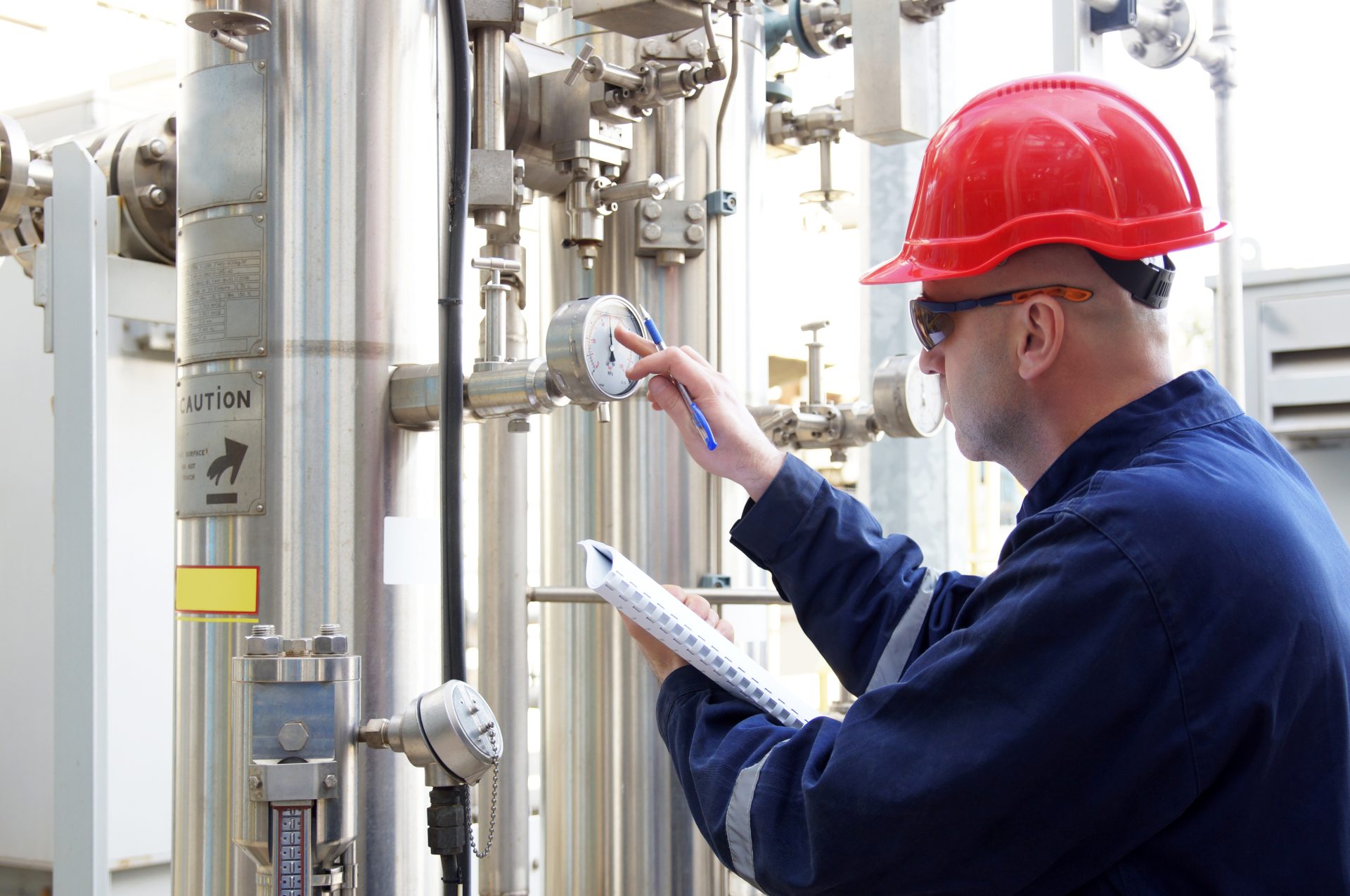
Filtration systems are rarely the first component considered when reviewing asset reliability in oil and gas, chemical processing, or other industrial operations. Yet their performance directly influences the condition of every piece of equipment downstream. Across compressors, pumps, turbines, process vessels, and instrumentation, filtration systems determine how much contamination reaches critical components and how quickly those components degrade.
When filtration systems are not properly maintained, contaminants bypass the filtration media, exposing downstream equipment to conditions that accelerate wear and increase the likelihood of unplanned downtime. A structured industrial filtration system maintenance strategy improves process reliability by directly influencing asset performance and lifecycle.
Why Industrial Filtration System Maintenance is Important
Industrial filtration systems are specifically designed to remove contaminants like particulates, liquid aerosols, and corrosion by-products before they can affect equipment or process performance. However, these filters have a limited operational lifecycle. As contaminants accumulate within the filter media, differential pressure rises, filtration efficiency drops, and the risk of media rupture or contaminant bypass increases.
In oil and gas operations specifically, the consequences of delayed maintenance extend beyond individual equipment failures. Contaminated lube oil circuits, seal gas systems, and fuel gas lines can trigger cascading failures across rotating equipment trains, resulting in production losses that are far more expensive than the cost of a timely filter replacement.
In the absence of a periodic maintenance schedule, facilities face an elevated risk of:
- Reduced process efficiency
- Increased energy consumption
- Higher equipment wear rates
- Unplanned maintenance events
- Reduced workplace safety
- Shorter asset life
To improve operational reliability, the maintenance approach must prioritize preventing degradation rather than emergency repairs. In the case of industrial filtration systems, this means monitoring performance indicators and component health before issues escalate into larger problems.
These are some common issues that industrial filtration systems face:
| Maintenance Issue | Potential Impact |
| Delayed filter replacement | Reduced contaminant removal efficiency |
| Excessive differential pressure | Higher energy consumption and reduced flow |
| Contaminant bypass | Increased wear of compressors, valves, and instrumentations |
| Poor inspections | Undetected performance degradation |
| Incorrect filter selection | Reduced system protection |
These issues build up over weeks and months, which is exactly why routine monitoring becomes highly important for maintaining system performance.
Correlation Between Filtration and Downtime
Equipment failures rarely occur without warning. In many cases, downtime results from gradual degradation as contaminants circulate through the system. Equipment failure accounts for approximately 42% of unplanned downtime incidents across oil and gas and broader industrial operations, with contaminants being the major contributor. These may include:
| Contaminant Type | Potential Equipment Impact |
| Solid Particles | Wear of bearings, seals, and valves |
| Water | Corrosion and lubricant degradation |
| Liquid Aerosols | Reduced compressor efficiency |
| Process Debris | Blockages and instrumentation issues |
| Corrosion Products | Increased equipment wear |
In rotating equipment applications such as gas compressors, turbines, and high-pressure pumps, these contaminants are particularly damaging. More than 50% of turbine bearing failures are directly attributed to contamination in lubrication systems. In seal gas systems, even low levels of particulate or liquid carryover can compromise mechanical seal integrity and trigger unplanned shutdowns. Effective industrial filtration system maintenance helps prevent these contaminants from developing into larger reliability problems.
Key Lifecycle Benchmarks for Filtration Systems
Facilities seeking to improve reliability outcomes are increasingly moving away from fixed replacement schedules towards measurable performance indicators. This shift is well established in oil and gas asset management, where condition-based maintenance programs are standard practice for rotating equipment but are now being extended more consistently to filtration systems as well.
The following benchmarks are commonly used to track filtration system health throughout its operating life:
- Differential Pressure (dP): It is the most common indicator for filter condition. Rising differential pressure often indicates contaminant loading and approaching filter saturation.
- Filter Element Service Life: Tracking average filter element service life helps maintenance teams to optimize replacement intervals while avoiding premature changeouts or excessive operation beyond design limits.
- Equipment Reliability Metrics: Filtration performance should be evaluated alongside broader reliability indicators such as:
- Mean Time Between Failures (MTBF)
- Mean Time To Repair (MTTR)
- Asset Availability
- Unplanned Downtime Frequency
Industries track these reliability metrics to understand how filtration performance affects overall asset reliability.
- Contamination Levels: Routine monitoring of fluid or gas cleanliness evaluates filtration effectiveness and identifies emerging contamination issues.
| Benchmark | What It Measures | Why It Matters | Measurement |
| Differential Pressure (dP) | Pressure drop across the filter element | Indicates contaminant loading and filter condition | kPa, bar, psi |
| Filter Element Service Life | Operating duration before replacement | Helps optimize maintenance intervals and lifecycle costs | Operating hours, days, months |
| Mean Time Between Failures (MTBF) | Avg. operating time between equipment failures | Measures reliability performance over time | Hours between failures |
| Mean Time To Repair (MTTR) | Avg. time required to restore equipment to service | Indicates maintenance effectiveness and downtime impact | Hours per repair event |
| Asset Availability | Percentage of time equipment remains operational | Reflects overall reliability and production readiness | % availability |
| Unplanned Downtime Frequency | Number of unexpected shutdown events | Tracks the effectiveness of reliability and maintenance programs | Events per month or year |
| Contamination Levels | Cleanliness of gas or fluid streams | Provides early warning of equipment wear and filtration performance issues | ISO cleanliness code, mg/m³, ppm, particle count |
When monitored together, these indicators provide a broader picture, allowing operators to identify emerging issues, optimize maintenance requirements, and maximize filtration system performance.
Effective Filtration Maintenance Strategy: Establishing a Consistent Maintenance Cadence
The most effective maintenance strategy focuses on tracking condition and performance, rather than solely focusing on replacing components. These practices can boost your industrial filtration system from average to highly reliable while reducing the risk of unexpected failures.
- Monitor Differential Pressure Regularly: Regularly monitoring pressure provides early visibility into filter loading and system performance. For example, in gas processing and compression applications, a sudden rise in dP can indicate liquid slugging or abnormal contamination events that require immediate investigation rather than a routine changeout.
- Conduct Routine Inspections: Regular inspections help identify seal damage, housing issues, corrosion, and other conditions that may affect filtration performance. For offshore and subsea-adjacent applications, housing integrity inspections are particularly important given exposure to humid, saline environments that accelerate external corrosion.
- Review Contamination Trends: Regularly monitoring contamination levels reveals process changes before they reach downstream equipment. Shifts in particle count or liquid carryover in a gas stream, for example, can indicate upstream process upsets, changes in feed composition, or early-stage equipment wear in inlet separators or scrubbers.
- Standardize Maintenance Procedures: Consistent inspection, replacement, and documentation practices improve maintenance quality, support long-term reliability, and maintain regulatory compliance (including HSE, API, and ISO).
Supporting Operational Reliability With Cleanova
Maintaining filtration system performance in oil and gas and industrial processing environments requires filtration technologies that perform reliably under demanding conditions, including high-pressure gas streams, variable liquid loading, corrosive process fluids, and wide operating temperature ranges.
Cleanova’s filtration solutions, including particulate filters, coalescing filters, and process filtration systems, are designed to control solid and liquid contaminants under these conditions. Our coalescing filters are engineered for gas processing applications where liquid aerosol removal is critical to protecting compressors, instrumentation, and downstream process equipment. Particulate filter elements in microfelt and microfine grades maintain the fluid and gas cleanliness standards required by rotating equipment in lube oil circuits, seal gas systems, and fuel gas lines.
Combined with a planned filtration maintenance program that includes routine monitoring, inspection, and filter element replacement, these filtration solutions reduce strain on downstream equipment, extend asset lifecycle, and reduce unplanned operational downtime across upstream production, midstream processing, and downstream refining environments.