

Artificial intelligence is driving one of the largest infrastructure buildouts in modern history.
Governments are investing billions to expand domestic semiconductor manufacturing capacity. Technology companies are racing to deploy increasingly powerful AI models. Hyperscale operators are constructing a new generation of data centers designed to support unprecedented computational demands.
Most discussions about AI focus on the visible elements of this transformation: advanced processors, massive computing clusters, and the extraordinary capabilities of generative AI. Yet behind every AI breakthrough lies a less visible but equally essential requirement: contamination control and filtration.
From the ultra-clean environments where advanced semiconductors are manufactured to the liquid cooling systems that keep AI servers operating efficiently, controlling contaminants has become fundamental to performance, reliability, and operational success.
As investment in AI infrastructure accelerates worldwide, contamination control – and filtration – is evolving from a supporting function into a strategic enabler of technological innovation.
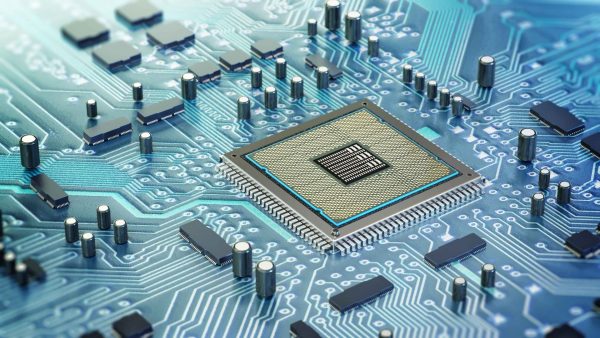
The Foundation of AI Begins in the Semiconductor Fab
Every AI application starts with a semiconductor
Whether powering large language models (LLMs), autonomous systems, scientific simulations, or advanced analytics, the processors that enable AI must first be manufactured in highly controlled environments where contamination is rigorously managed.
Modern semiconductor fabrication represents one of the most contamination-sensitive manufacturing processes in the world. As chip architectures continue to become smaller and more complex, even microscopic airborne particles can affect product quality, manufacturing yields, and production efficiency.
The challenge extends beyond particulate contamination. Airborne molecular contaminants can also affect sensitive manufacturing processes, making comprehensive contamination-control strategies increasingly important throughout semiconductor facilities.
To address these challenges, semiconductor manufacturers rely on sophisticated cleanroom environments supported by state-of-the-art filtration technologies, carefully engineered airflow systems, and continuous contamination monitoring. These systems help maintain the precise environmental conditions required for the production of increasingly complex semiconductor devices.
As demand for AI chips continues to grow, maintaining these controlled environments is becoming even more critical. The industry’s ability to scale semiconductor production depends not only on manufacturing capacity but also on its ability to consistently maintain the clean conditions required for advanced fabrication processes.
Four Decades of Supporting Contamination-Sensitive Industries
The contamination-control challenges associated with today’s AI economy may be unprecedented in scale, but they are built upon principles that have guided critical manufacturing environments for decades.
In 2026, TES-Clean Air Systems, now a part of Cleanova, marks 40 years of helping customers manage airborne contamination in some of the world’s most demanding applications. Since 1986, the company has supported industries where air quality, environmental control, and contamination management directly influence operational performance and product quality. Today, TES’s expertise in cleanroom contamination control is complemented by Cleanova’s expanded capabilities including custom Fan Filter Units (FFUs), HEPA and ULPA filtration systems, and engineered clean air solutions that help semiconductor manufacturers maintain the ultra-clean environments required for advanced chip fabrication.
Over four decades, manufacturing technologies have evolved dramatically. Semiconductor production has advanced from comparatively simple fabrication processes to today’s highly sophisticated facilities capable of producing devices measured in nanometers. Cleanroom standards have become increasingly stringent, and contamination-control requirements have grown more complex.
Yet the fundamental objective remains unchanged: protecting critical processes from contaminants that can compromise performance, reliability, and quality.
The experience gained over forty years of supporting contamination-sensitive environments provides valuable perspective as the AI economy creates a new generation of infrastructure challenges. While the technologies may be evolving rapidly, the need for effective contamination control remains constant.
The Rise of AI Data Centers Creates New Challenges
Once semiconductors leave the fabrication facility, they enter another environment where contamination control plays an increasingly important role: the AI data center.
The computational requirements of modern AI workloads are fundamentally changing data center design.
Traditional enterprise data centers were built around relatively modest server densities and air-cooling systems. Today’s AI environments are different. High-performance computing clusters consume substantially more power, generate significantly greater heat loads, and require increasingly sophisticated cooling strategies.
As a result, liquid cooling technologies are moving from niche applications to mainstream deployment across hyperscale and high-performance computing environments.
Direct-to-chip cooling, rear-door heat exchangers, immersion cooling systems, and other advanced thermal management approaches are becoming essential tools for supporting next-generation AI infrastructure.
These technologies improve cooling efficiency and enable higher computing densities, but they also introduce new contamination-control considerations.
Cooling fluids must be maintained within tightly controlled specifications to protect pumps, valves, heat exchangers, cold plates, and other critical infrastructure. Particulate contamination, corrosion byproducts, scale formation, and process impurities can negatively affect system performance, increase maintenance requirements, and reduce operational reliability.
As AI data centers continue to scale, fluid cleanliness is becoming an increasingly important component of infrastructure management.
The Convergence of Air and Liquid Filtration
At first glance, semiconductor cleanrooms and AI data centers appear to have little in common.
One focuses on maintaining pristine manufacturing environments through advanced air filtration and contamination control. The other is increasingly concerned with thermal management, cooling efficiency, and liquid system performance.
However, both environments face the same fundamental challenge: protecting critical processes from contaminants that threaten performance and reliability.
Whether in semiconductor fabrication facilities or AI data centers, effective filtration plays a critical role in maintaining the performance, reliability, and efficiency of these increasingly sophisticated environments.
In semiconductor fabrication facilities, airborne particles and molecular contaminants can affect manufacturing yields and product quality. In AI data centers, contaminants within cooling systems can reduce efficiency, accelerate equipment wear, and compromise infrastructure performance.
The specific technologies may differ, but the underlying objective remains remarkably similar.
Both environments require carefully engineered solutions designed to control contaminants before they create operational problems. Both depend on reliable filtration technologies. Both demand specialized expertise and deep application knowledge.
A More Integrated Approach to Contamination Control
This convergence is creating opportunities for a more holistic approach to contamination management across the AI value chain.
Air filtration, liquid filtration, cleanroom technologies, process optimization, and contamination-control expertise have historically been viewed as separate disciplines. Today, the rapid growth of AI infrastructure is highlighting the interconnected nature of these challenges.
A semiconductor manufacturer’s contamination-control requirements may begin with cleanroom air quality but extend into process fluids and supporting infrastructure. Similarly, data center operators focused on liquid-cooling performance must consider broader operational factors that affect reliability and uptime.
The ability to integrate expertise across multiple contamination-control domains is becoming increasingly valuable as customers seek comprehensive solutions rather than isolated technologies.
Supporting the Infrastructure Behind Innovation
While artificial intelligence continues to capture news headlines, the infrastructure that enables it often receives far less attention.
Yet every AI breakthrough depends on an extensive network of semiconductor fabrication facilities, cleanrooms, cooling systems, manufacturing processes, and critical infrastructure operating behind the scenes.
As investment in AI infrastructure accelerates, contamination control will continue to play a central role in enabling performance, efficiency, and reliability across the technology ecosystem.
Cleanova.NEXUS: Connecting Critical Filtration Technologies Across the AI Value Chain
Through Cleanova.NEXUS™, Cleanova brings together expertise spanning air filtration, liquid filtration, cleanroom contamination control, and critical process applications. By integrating capabilities from TES-Clean Air Systems, Airflotek, and the broader Cleanova platform, the company supports customers across multiple stages of the AI infrastructure lifecycle.
From helping semiconductor manufacturers maintain contamination-controlled cleanroom environments to supporting fluid cleanliness within advanced cooling systems, Cleanova’s technologies contribute to the reliable operation of the infrastructure that powers the modern AI economy.
As artificial intelligence continues to transform industries around the world, one reality is becoming increasingly clear: the future of AI depends not only on computing power, but also on the ability to control the contaminants that threaten it.