

A cartridge that reaches change-out pressure too quickly, lets unwanted particles through, or fails prematurely can signal a mismatch between the filter specification and the process conditions. Identifying that mismatch starts with reviewing contaminant loading, particle behavior, fluid properties, flow rate, temperature, pressure, and housing configuration.
Those factors determine how to select the right cartridge filter for the process. The micron rating forms part of that decision. Media type, pore structure, surface area, filtration mechanism, rating basis, construction, and operating limits also shape how a cartridge performs in service. Cleanova’s wound, melt-blown, pleated, high-flow, membrane, carbon, PTFE, and metallic cartridge technologies address these different requirements.
The Filtration Objective
Cartridge selection begins with defining what the process needs to remove and how that contaminant behaves in the fluid. The contaminant type, concentration, and behavior influence the filtration mechanism, media, rating, and expected service life.
Common process requirements may include:
- General particulate removal and clarification
- Removal of hard, non-deformable particles
- Fine or sub-micron particle retention
- Microbiological control
- Adsorption in industrial water applications
Each requirement places different demands on the filter. A cartridge suited to general clarification may behave differently in a microbiological application, a solvent stream, or a high-viscosity liquid.
With the removal objective established, the capture mechanism provides the next point of comparison.
How to Select the Right Cartridge Filter by Filtration Method
The main capture approaches are depth filtration and surface filtration. Understanding the difference helps narrow the choice between wound, melt-blown, and pleated cartridges.
Wound cartridges
Wound cartridges are economical depth filters made from continuous fiber yarn spirally wound around a central support core. When correctly sized for the application, this construction can provide high dirt-holding capacity with relatively low pressure drop. Wound cartridges suit general clarification where a nominal rating meets the requirement.
Melt-blown cartridges
Melt-blown cartridges use structured media to retain particles through the depth of the element. The Proxis T and Proxis A ranges show how melt-blown cartridges can be specified with different rating bases and removal efficiencies.
Pleated cartridges
Pleated cartridges are surface filters for hard, non-deformable particles in liquid streams. Their large filtration area supports high flow rates, dirt-holding capacity, and extended filtration life. Pleated construction suits processes that benefit from surface capture and a larger available filter area.
Particle characteristics and contaminant loading guide this choice. A stream carrying soft or deformable solids can behave differently from one carrying hard particles, even when both applications call for the same micron rating.
These distinctions establish the first practical selection point. The next step is to establish how consistently the selected cartridge needs to remove the specified particle size.
Understanding Nominal and Absolute Ratings
The rating basis explains how to interpret the micron value assigned to a cartridge. Two cartridges with the same micron rating can have different removal efficiencies, depending on whether the rating is nominal or absolute.
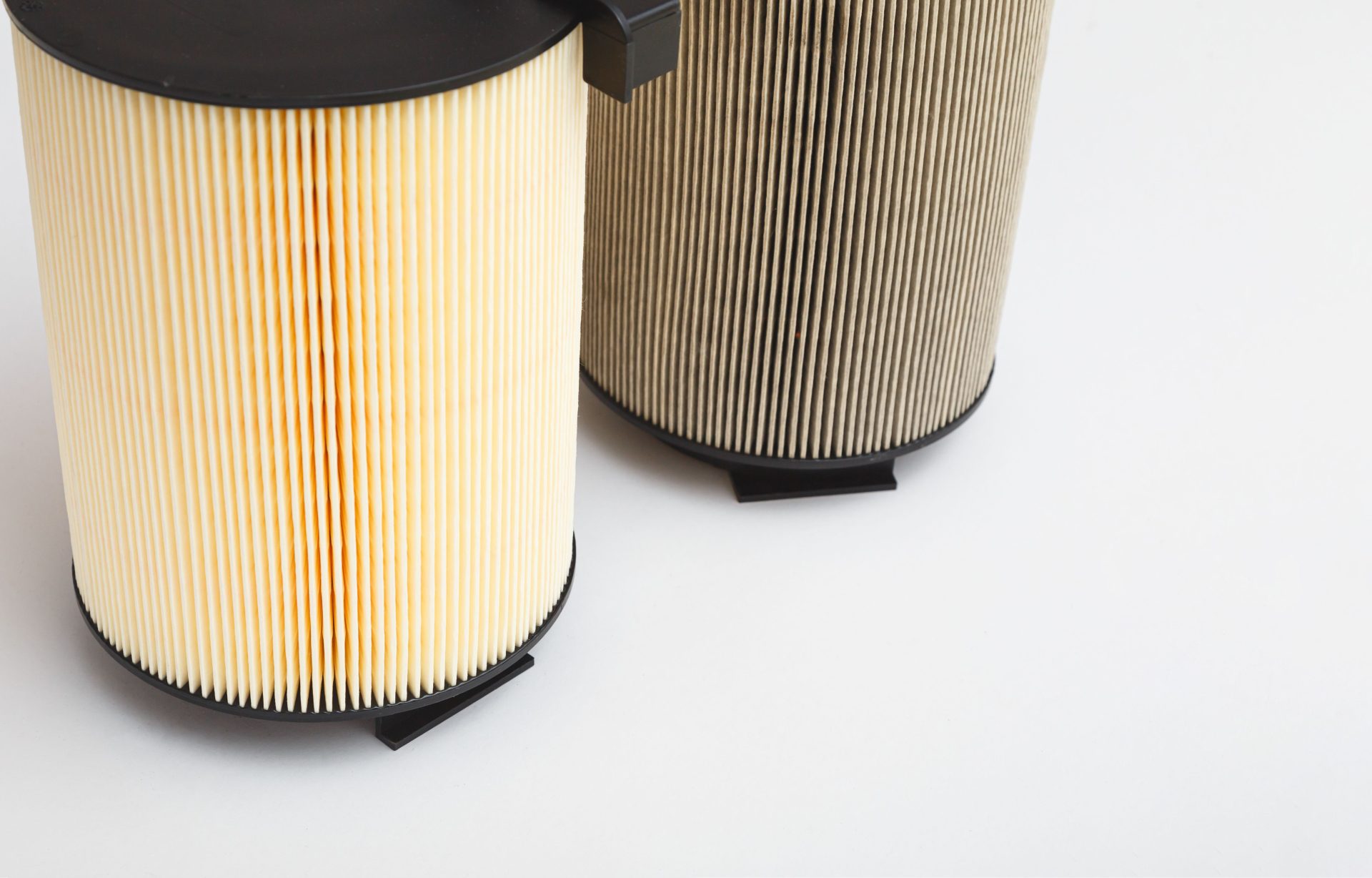
Cleanova’s Proxis ranges illustrate this distinction.
| Proxis Range | Rating |
| Proxis T | Nominally rated at 90 percent particle removal efficiency at the designated micron rating. |
| Proxis A | Absolutely rated at 99.9 percent particle removal efficiency at the designated micron rating. |
A nominal rating suits general clarification and prefiltration where some variation in particle passage is acceptable. Absolute performance supports applications that require a higher, more clearly defined removal efficiency at the specified particle size.
These applications may include protecting a downstream membrane, meeting a product clarity requirement, or supporting a controlled filtration step. The rating type forms part of the cartridge specification alongside the micron value.
With the rating basis established, the remaining specification needs to match the fluid and operating conditions.
Beyond the Micron Rating
While micron rating describes the particle-size performance of a cartridge, media selection, construction, and operating limits determine how that performance translates into service.
Media selection governs chemical compatibility, temperature resistance, mechanical strength, and suitability for application. Polypropylene appears across several Cleanova depth, pleated, and membrane constructions. Its suitability still needs to be checked against fluid chemistry, temperature, concentration, exposure time, and gasket materials.
Cleanova’s media options show how process conditions influence material selection.
| Media | Best suited for | Why it fits |
| Polypropylene | General particulate filtration and prefiltration in compatible liquids | Can be formed into graded-depth or pleated media and offers broad chemical compatibility |
| Nylon | Solvents, solvent-based paints and coatings, petrochemicals | Holds up well in these fluids, but is not suited to water-based products, where a different media performs more reliably |
| Glass fiber | Fine filtration, high-efficiency particle removal, and higher temperature applications | High-efficiency retention and better heat resistance than polypropylene, when chemically compatible |
| Polyethersulfone | Fine and sterilizing filtration | Pleated asymmetric membrane provides precise particle retention and high filtration area |
| PTFE | Tank and vessel vent filtration | Hydrophobic membrane allows airflow while protecting against liquid ingress |
Once the media compatibility is confirmed, the rest of the specification needs the same level of scrutiny:
- Construction and operating limits: Hardware material, end-cap design, gasket material, maximum temperature, maximum differential pressure, and recommended change-out pressure all need to align with the process. A cartridge with suitable chemical compatibility can still be unsuitable when its temperature or pressure rating falls below the actual operating conditions.
- Flow rate and viscosity: These influence cartridge size, filtration area, and expected service life. High-flow applications often call for more filtration area, a larger-diameter element, or a dedicated high-flow design to avoid forcing flow through undersized media.
- Differential-pressure trend: A rising trend can indicate a change in the process, such as loading within the cartridge, a higher solids concentration, a different particle-size distribution, greater viscosity, or a recent upstream change.
Reviewing the pressure-drop trend, the removed cartridge, flow conditions, and contaminant loading together helps show whether the issue involves cartridge capacity, process variation, or housing configuration. These checks provide the information needed to match the cartridge technology to the process duty.
Matching the Technology to the Process
The process requirement can now be linked to a suitable cartridge family. The examples below connect common filtration concerns to a Cleanova technology and the factors that influence the final specification.
Need high flow with particulate loading?
A high-flow pleated design can support greater throughput while managing significant or variable solids loading.
The HF Series is built for high-flow pleated filtration. Its upstream support layer ensures even fluid distribution across the entire filtration area. The selected rating and operating limits need to match the contaminant load and process conditions.
Need solvent compatibility for coatings or petrochemicals?
Nylon media is suited to solvents, solvent-based paints and coatings, and petrochemicals.
The Proxis N Series uses nylon media for these applications. Operating temperature, core material, pressure limit, and end-cap seals form part of the specification.
Need fine or microbiological retention?
A membrane cartridge may suit applications that require fine or microbiological retention.
The PESG Series uses an asymmetric polyethersulfone membrane and is designed as a microbially rated filter. CleanSelect CSS and CleanPurity CPP cartridges support demanding food and beverage applications where integrity testing, sterilization, and microbiological control matter.
Need adsorption in an industrial water process?
Activated carbon supports applications where adsorption forms part of the treatment objective.
The ECB and SCB Series use activated carbon in a carbon-block format. ECB provides high adsorption, and SCB provides very high adsorption. The contaminant, adsorption requirement, operating temperature, and allowable differential pressure determine the suitable option.
Need tank protection from microbial ingress?
Vent filtration helps storage vessels maintain balanced pressure during filling and emptying while reducing the risk of product contamination and microbial ingress.
Cleanova’s PTFE Series uses a PTFE membrane for this duty.
Need reusable filtration for viscous fluids?
Reusable stainless steel mesh filtration may suit high-viscosity fluids and applications involving repeated cleaning.
Starmesh cartridges are available in pleated and non-pleated designs and support backwashing, ultrasonic cleaning, chemical treatment, and surface brushing. Final selection depends on mesh rating, operating temperature, and cleaning method.
These examples reflect how the process concern and application determine the appropriate cartridge technology. The selected element also needs to fit the housing and sealing arrangement already in place.
Housing and Cartridge Interface
Cartridge performance depends on the connection between the element and the housing. End-cap configuration, seal material, cartridge dimensions, and core design must match the existing equipment.
Cleanova supplies double-open-ended cartridges and industry-standard configurations including Code 3, Code 7, and Code 8. Code 7 typically uses 2 x 226 O-rings with a double bayonet at the open end, with a spear at the closed end. The correct configuration allows the cartridge to seat, seal, and operate as intended within the housing.
For high-flow applications, Cleanova’s HF Series pleated cartridges are available with three single open end-cap styles and a choice of O-ring materials. The selected end cap must match the housing’s cartridge seat, while the O-ring material must be compatible with the process fluid and operating conditions.
Reviewing the filter, housing, seals, and operating conditions together creates a more complete basis for the final specification. The following checklist brings those considerations into one selection process.
A Practical Cartridge Selection Checklist

A complete specification commonly considers the following areas.
Contaminant and retention
- What contaminant needs to be removed?
- What is the contaminant concentration and particle-size distribution?
- Are the particles hard, soft, deformable, or biological?
- What particle size must be retained?
- Is a nominal or absolute rating required?
- Does the process require microbial stabilization, microbiological retention, or validated sterilization?
Fluid and operating conditions
- What is the required flow rate?
- What is the fluid viscosity across the operating temperature?
- What are the operating temperature and pressure?
- What chemicals will contact the cartridge?
- What are the maximum operating differential pressure and the recommended change-out differential pressure?
- How much dirt-holding capacity does the process require?
Equipment and maintenance
- What housing and end-cap configuration is already in place?
- Does the cartridge require steam sterilization, chemical sanitization, or repeated cleaning?
Working through these questions ties the filter specification to actual process conditions and provides a practical framework for selecting the right cartridge filter in the field. It also reduces the risk of choosing a cartridge that matches the required micron value on paper while reaching change-out pressure too quickly or falling short on removal performance.
Work with a Filtration Specialist
Cartridge selection brings together media, construction, filtration rating, operating limits, contaminant loading, and equipment configuration.
Cleanova combines cartridge manufacturing, application expertise, and technical support to help process and maintenance teams select filtration solutions around actual operating conditions. Cleanova filtration specialists can review the process, housing, and filtration requirements together before a specification is finalized.
View Cleanova’s Cartridge Filter Brochure here.
Have questions about how to select the right cartridge filter?